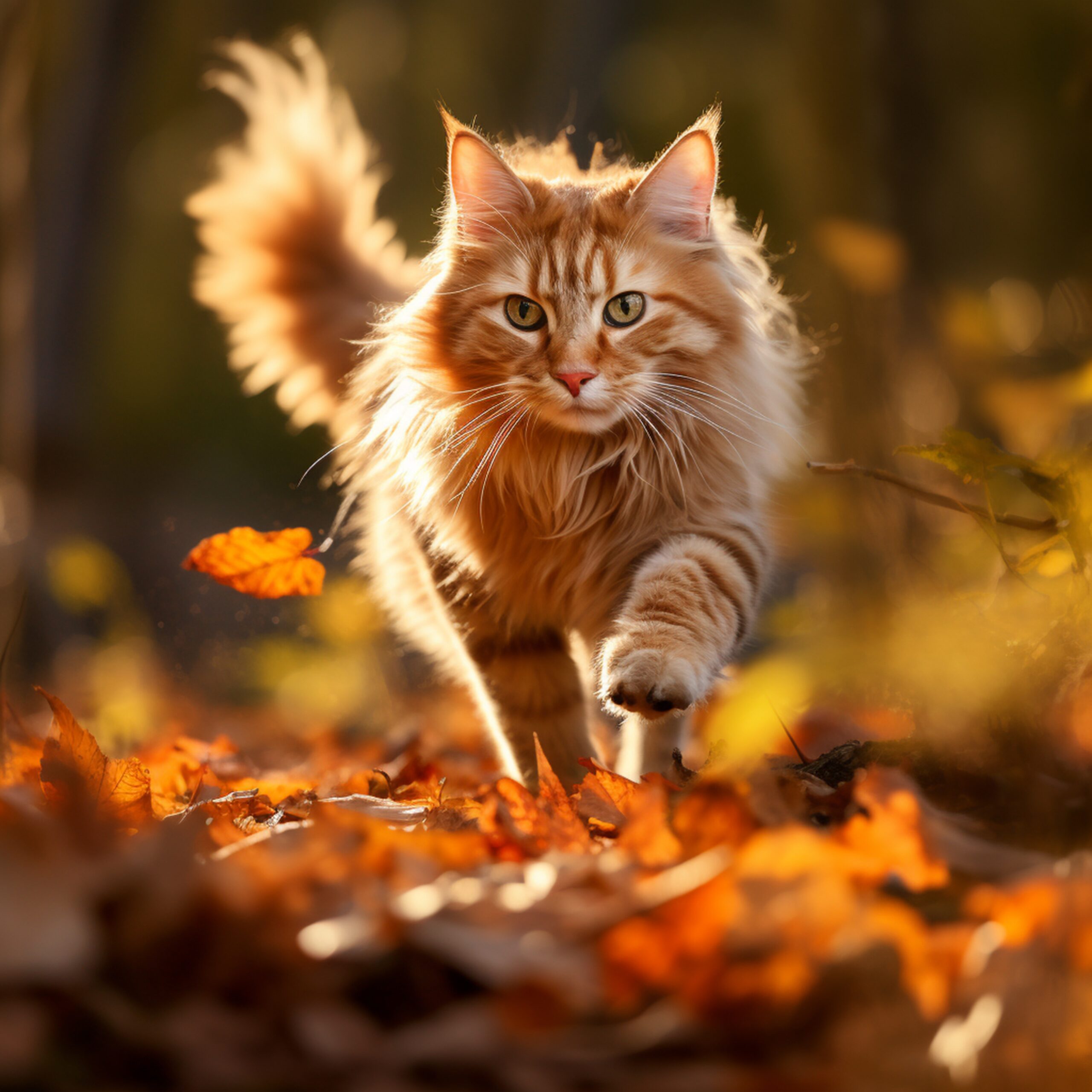
I’ll never forget the day I brought my first orange tabby home. Within twenty minutes, he’d successfully climbed to the top of a floor lamp, stared into the lightbulb until he was cross-eyed, and then tipped the entire thing over. He landed perfectly on his feet with a look that said, “I meant to do that.”
If you’ve ever looked at your orange cat and wondered if there’s anything going on behind those eyes besides a faint dial tone, you aren’t alone. I’ve spent years living with these walking Cheetos, and I’ve realized that Orange Cat Energy isn’t just a meme. It’s a lifestyle.
But is your cat actually “special,” or is there a method to the madness? Let’s break down the science, the myths, and the absolute mayhem that comes with owning a ginger.
Is Your Orange Chaos-Muppet Eating Right? Trust me, a hangry orange cat is a dangerous orange cat. I’ve had my ankles hunted at 5:00 AM because the bowl was 10% empty. Check out our Advanced Cat Nutrition Calculator to keep the beast tamed.
🐱 Table of Contents
Orange Cat Behavior: Personality Myths, Science & The “One Brain Cell”
catbehaviorhq.com · March 23, 2026
- 01 Common Traits of Orange Cat Behavior →
- – The Friendliness Factor: Golden Retrievers in Cat Suits →
- 02 Decoding the “One Brain Cell” Behavior →
- – The 80/20 Rule: Why Are They Always Boys? →
- 03 Physical Quirks That Impact Behavior →
- – Lentigo and Pink Noses →
- 04 How to Manage Typical Orange Cat Behavior →
- 05 Final Thoughts on Living with Orange Cats →
Common Traits of Orange Cat Behavior
In my house, Orange Cat Energy is that specific brand of behavior where a cat is 50% “I love you more than life itself” and 50% “I am going to jump off this fridge and hope for the best.”
The hallmark traits usually include zero fear, being a total stage-five clinger, and screaming their opinions at 3:00 AM. Seriously, privacy is a relic of the past once you bring a ginger cat into your home. If you aren’t sure if they’re being playful or just plain weird, check out our guide on Understanding Cat Body Language to see what they’re actually trying to tell you.
The Friendliness Factor: Golden Retrievers in Cat Suits
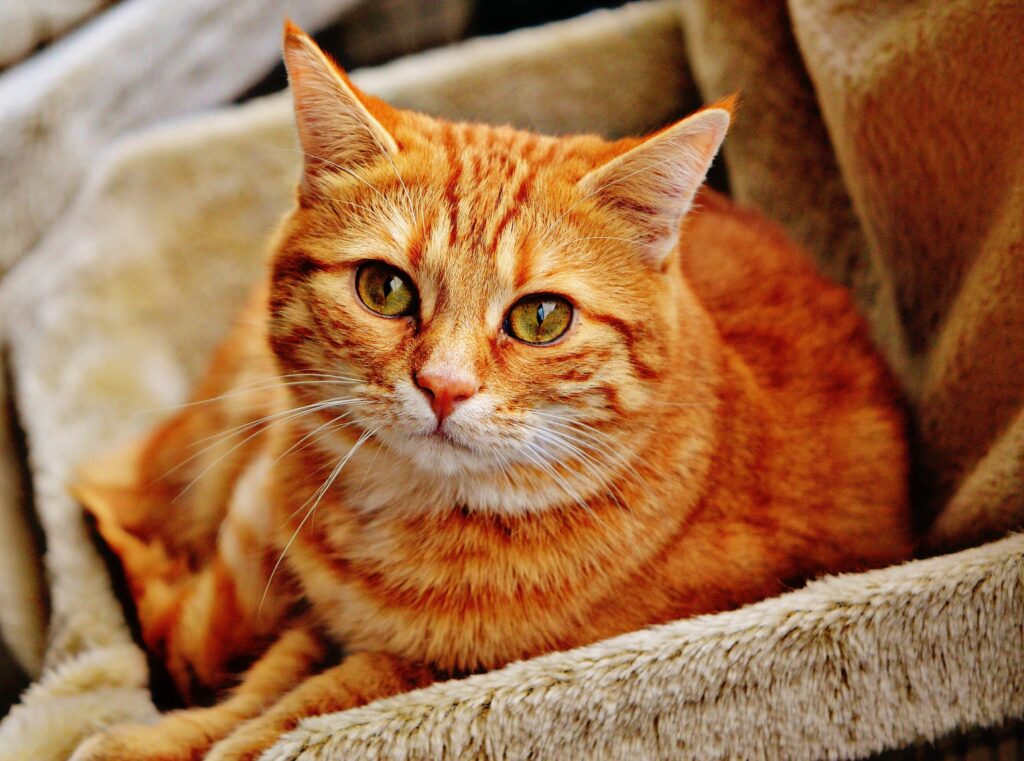
It’s not just in your head. Science has actually looked into why we’re so obsessed with them. A big study from UC Berkeley found that we’re collectively “guilty” of typecasting cats by their color. Out of all the coat patterns, orange cats were overwhelmingly voted the most friendly and gregarious. Meanwhile, white cats were labeled as aloof and tortoiseshells as “intolerant.”
Whether they’re actually born more social or we just expect them to be, the “Orange Cat Energy” is a documented phenomenon. We’ve basically turned them into the Golden Retrievers of the cat world and they seem more than happy to lean into the role if it means extra head scritches.
Human Perceptions of Coat Color as an Indicator of Domestic Cat Personalit
Decoding the “One Brain Cell” Orange Cat Behavior
We’ve all seen the videos. I once watched my cat try to catch a laser pointer that wasn’t even turned on for ten solid minutes.
Is it low IQ? Probably not. It’s actually High Confidence + Low Risk-Assessment. Most cats are cautious. Orange cats are “send it” cats. They act first and think… well, they usually don’t get to the thinking part. To keep that energy directed at toys instead of your heirloom vases, you should look into some high-level Enrichment for House Cats.
The 80/20 Rule: Why Are They Always Boys?
Ever noticed that you rarely see a female orange cat? For a long time, I thought they were like shiny Pokémon. They seemed rare and mystical.
To be orange, a cat needs the orange mutation on their X chromosome.
- Males (XY) only have one X. If they get the gene from Mom, they’re orange.
- Females (XX) have two. To be fully orange, they need the gene from both parents.
Because the math is stacked against the girls, 80% of orange cats are male. Scientists recently discovered this is caused by a specific genetic ‘glitch’ (a deletion near the Arhgap36 gene) that essentially hijacks the hair’s pigment production, forcing it to switch from dark colors to orange. This probably explains the jock personality. Neutered males are generally more chill and people-oriented than females.
Molecular and genetic characterization of sex-linked orange coat color in the domestic cat
Physical Quirks That Impact Orange Cat Behavior
Sometimes what looks like weird behavior is actually just physical. For instance, have you noticed “ginger freckles”?
Lentigo and Pink Noses
When I first saw a black spot on my cat’s pink nose, I panicked and called the vet. Don’t be like me. It’s usually just Lentigo. Orange cats are the redheads of the animal kingdom. They get freckles as they age! Think of them as beauty marks earned for every time they’ve accidentally fallen off the sofa.
How to Manage Typical Orange Cat Behavior
- Manage the Appetite: Orange cats are the Garfields of reality. I have to keep my bread in a locked cabinet because my cat is a literal carb-thief. Use puzzle feeders so they have to work for their snacks.
- Vertical Escape Routes: Since they love to climb things they shouldn’t, give them a high-up safe zone. A tall cat tree can save your curtains from certain death. If they’ve already moved on to the furniture, we have a full breakdown on how to stop a Cat Clawing the Sofa before it’s shredded to bits.
- Embrace the Noise: They are vocal. If you try to ignore an orange cat’s meow, they will simply increase the volume until you cave. If yours is specifically keeping you up until sunrise, here’s how to handle Cat Meowing at Night without losing your mind.
Final Thoughts on Living with Orange Cat Behavior
At the end of the day, Orange Cat Energy is a gift. Sure, I might have to rescue my cat from the top of a door frame twice a week, but I’ve never found a more loyal or hilarious companion. They might only have one brain cell, but they use 100% of it to love you.
Frequently Asked Questions
Everything you were afraid to ask about your chaos-muppet