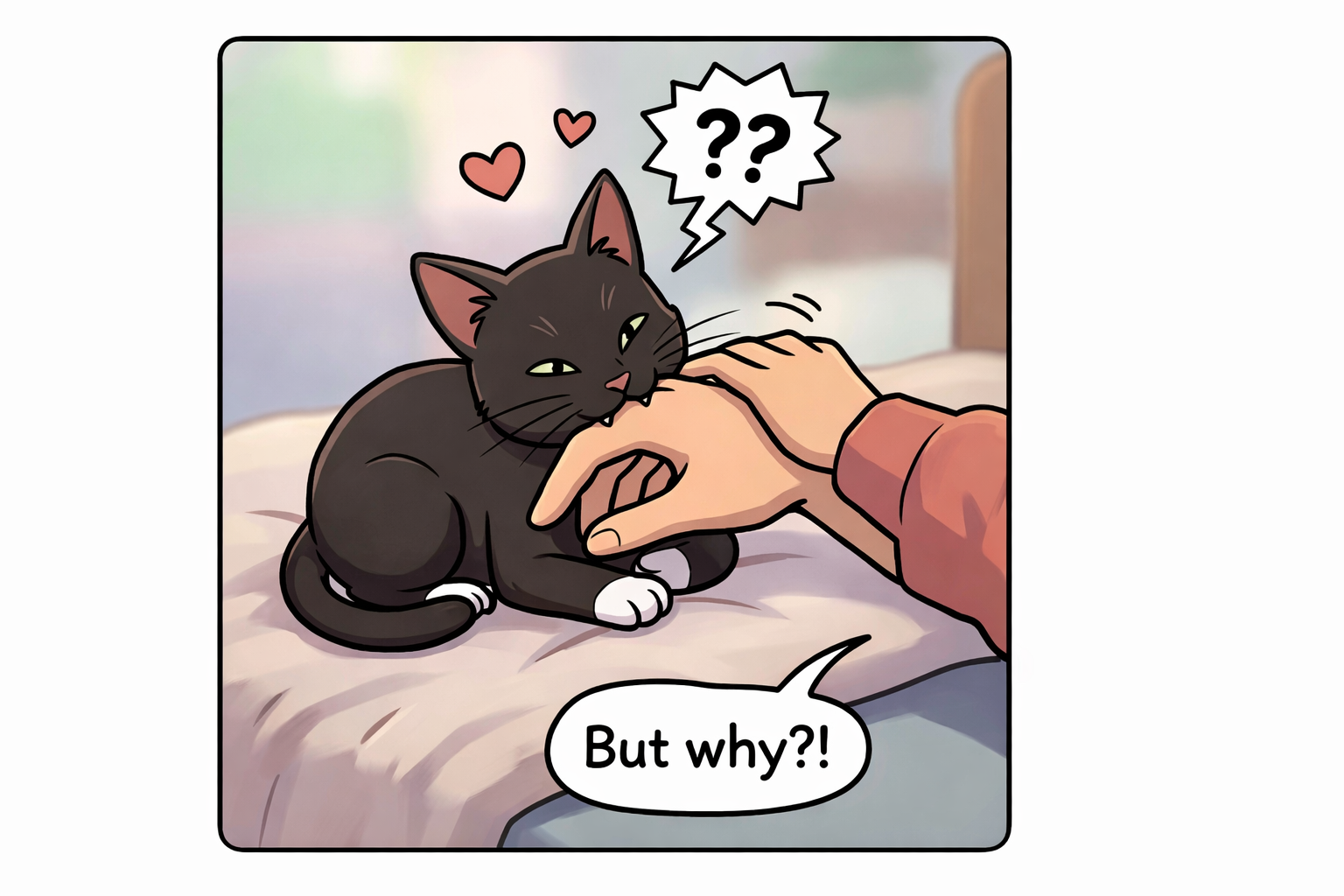
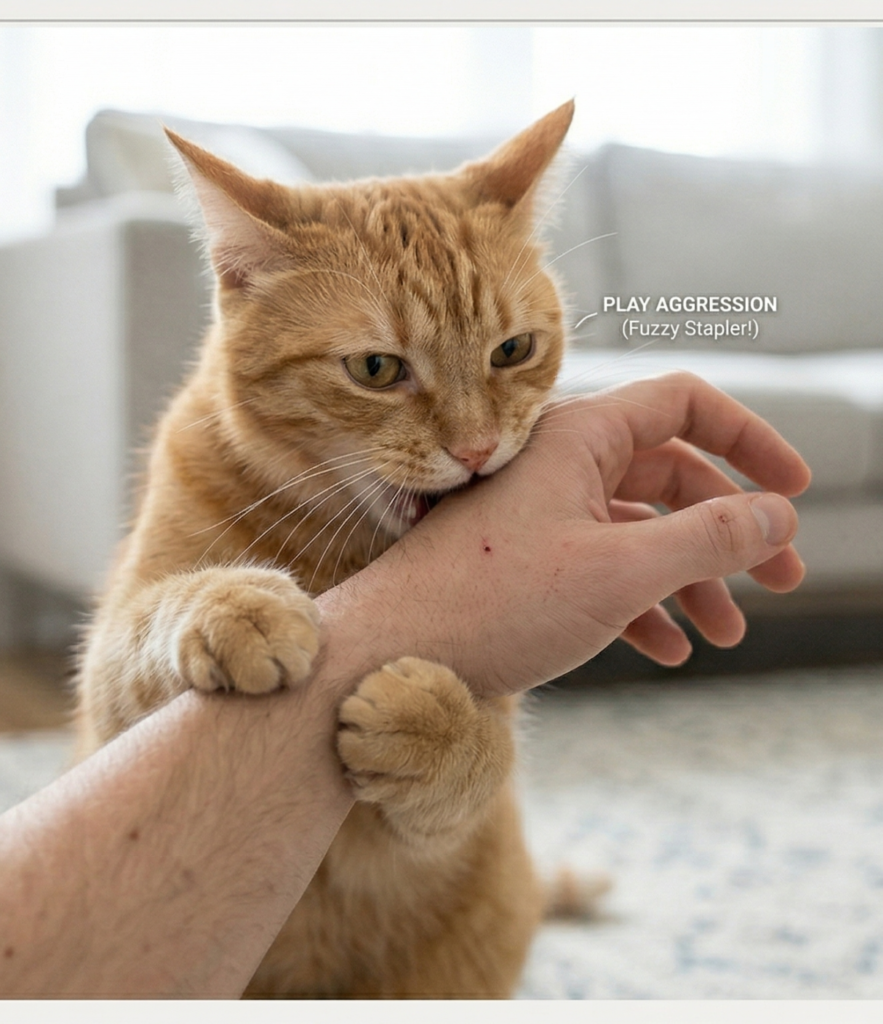
I’ll never forget the first time my cat turned into a tiny, furry stapler. One minute I was peacefully scrolling through my phone while he purred on my lap, and the next, he had latched onto my forearm like it was a prize-winning salmon. He didn’t even look angry; he just bit me, stared at me for a second, and then went back to grooming his paw like nothing happened.
If you have ever dealt with a cat biting me out of nowhere, you know how confusing it is. It feels like a total betrayal. You’re sitting there thinking you’re having a “moment” and suddenly you’re reaching for the Band-Aids.
But here is the thing: cats almost never bite for no reason. Even when it feels random, they are usually following a very specific internal logic. If you are tired of your cat biting me, let’s look at why your cat is treating you like a snack and how to finally get them to stop.
Is your cat’s attitude tied to their appetite? Sometimes a biting cat is actually just a hangry cat. I noticed my own cat got way nippier right before breakfast. I started using our Advanced Cat Nutrition Calculator to make sure he was actually getting enough protein to keep his mood stable throughout the day.

Why is My Cat Biting Me During Petting?
The most common reason for a cat biting me during a cuddle session is overstimulation. It is a classic case of too much of a good thing.
A recent 2024 study published in Animals (and hosted by the NIH) looked specifically at aggression directed toward owners. The research confirms that many biting incidents happen because we miss the subtle signals a cat gives when they are finished being touched. Their nervous system essentially hits a limit where petting stops feeling good and starts feeling like an annoying physical poke.
The bite is their way of hitting the stop button. When you experience a cat biting me in this situation, they are not being mean. They are just using the only tool they have to say ‘enough.’ To get better at spotting these invisible boundaries, check out our Cat Body Language Mood Decoder so you can see the twitchy tail before the teeth come out.
Cat Biting Me While I Walk: The Predatory Drive
If your cat biting me happens while you are walking across the room or moving your feet under the blankets, you are dealing with misdirected predatory drive.
In the wild, cats spend hours stalking and pouncing on small prey. In a house, your ankles are the closest thing to a scurrying mouse. If they don’t have enough “jobs” to do, they will invent their own, often resulting in a cat biting me on the legs or feet. This is especially common in high-energy breeds or those “one brain cell” orange tabbies.
I found that the best way to stop this was to stop using my hands as toys. If they bite, play stops immediately. Then, I redirect that energy into a proper hunt. You can find some great ideas for this in our guide to Enrichment for House Cats.
Is a Cat Biting Me a Sign of Pain?
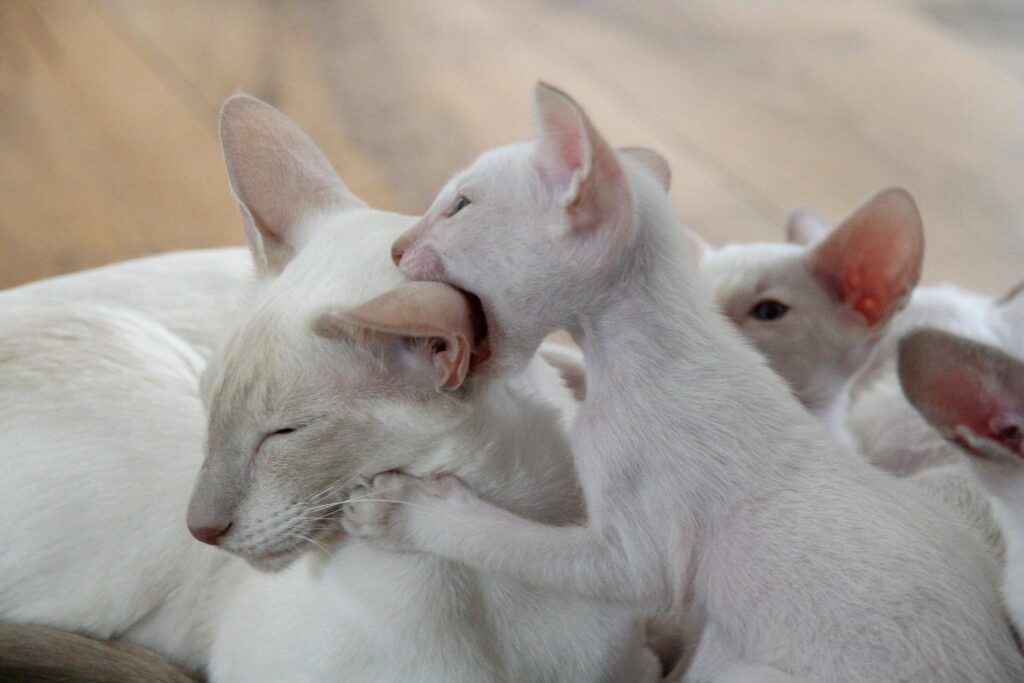
Sometimes a cat biting me is not about behavior at all. It is about physical pain.
If your cat normally loves being touched but suddenly snaps when you pet a specific area, they might have an underlying injury or arthritis. This is very common in senior cats who are trying to protect a sore joint. A cat biting me suddenly can be their only way to communicate that they are hurting.
Just like when we discussed Cat Crying in the Litter Box, sudden aggression is often a symptom of something internal. Experts at the Cornell Feline Health Center explain that medical conditions like dental disease, arthritis, or infections can make a cat feel vulnerable and defensive. If the biting is a new and sudden behavior, a vet visit is the right move.
How to Handle a Cat Biting Me Right Away
I’ve learned the hard way that how you react in the moment matters more than the bite itself.
- Don’t pull away fast: It sounds counterintuitive, but jerking your hand away triggers their prey drive and makes them clamp down harder. Instead, lean into the bite slightly. It confuses them and makes them let go.
- The “No Hands” Rule: Never wrestle with your cat using your bare hands. Always put a toy between you and their teeth. If they take out their energy on your sofa instead, we have a whole guide on Stopping Cat Clawing to help save your furniture.
- Watch the Tail: If the tail is thumping against the floor or their ears are slightly flattened, stop petting immediately. Don’t wait for a cat biting me incident to happen.
Final Thoughts on My Cat Biting Me
Dealing with a cat biting me can be frustrating, but it is usually just a communication breakdown. Once I learned to respect my cat’s petting limit and gave him better things to hunt than my toes, the biting almost completely stopped.
They might be predators, but they are also roommates. We just have to learn to speak their language.
What’s the weirdest biting experience you’ve had? I’m still convinced my cat does it just to make sure I’m still awake sometimes.
Frequently Asked Questions
The most common questions cat owners ask about biting and attacks — answered clearly and concisely.