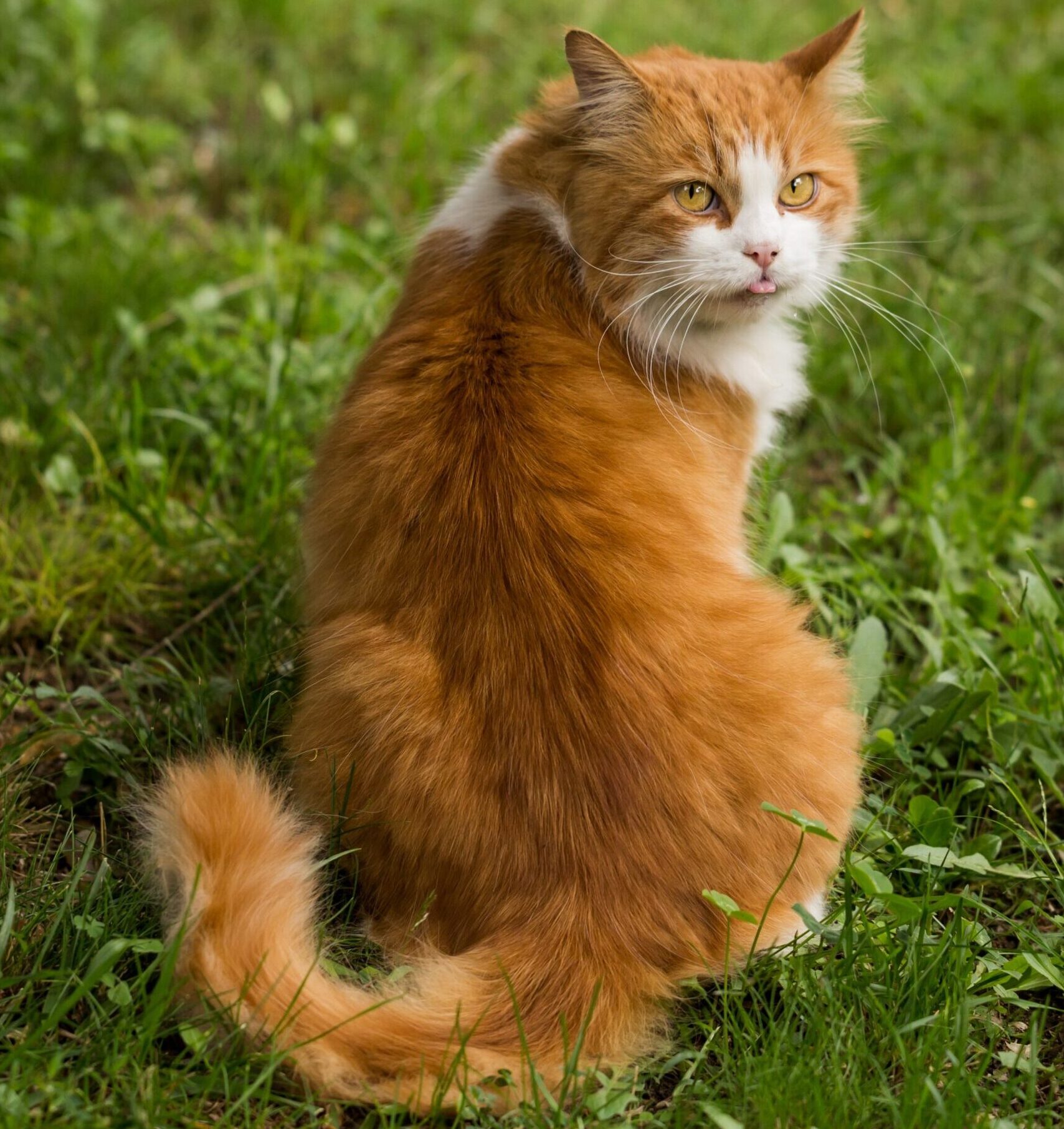
I’ll never forget the first time I saw my cat go full “tornado mode” in the middle of the kitchen. One second he was grooming his paw, and the next, he was spinning so fast he looked like a fuzzy orange blur. He finally caught his tail, bit it, hissed at himself, and then ran out of the room like he’d been offended by his own anatomy.
If you’ve seen your cat chasing tail like it’s a mortal enemy, you’ve probably wondered if they’ve finally lost that “one brain cell.” While it’s usually one of the funniest things a cat can do, there is actually some fascinating science behind why they decide to hunt their own backside.
Is it just a game, or is your cat trying to tell you something? Let’s break down the physics and the psychology of the tail-chase.
Is Your Little Hunter Burning Too Much Energy?
Chasing a tail is high-intensity cardio. If your cat is constantly on the move, they might be burning through their fuel faster than you think. I use our Advanced Cat Nutrition Calculator to make sure my high-energy spinner is getting the right balance of nutrients to support all that “zoomie” energy.
Table of Contents
Why Does My Cat Chase Its Own Tail?
catbehaviorhq.com
The “Predatory” Glitch: Why is My Cat Chasing Its Tail?
At its core, a cat chasing its tail is often just a case of misdirected predatory drive. Cats are biologically hardwired to react to movement. Sometimes, out of the corner of their eye, that flickering tail looks less like a body part and more like a very tempting feathered toy.
Experts at the Cornell Feline Health Center explain that tail chasing can occur when a cat is in a state of high arousal. This is often a displacement behavior. Basically, when a cat has a surge of physical energy or stress and no clear way to release it, they might redirect that “arousal overflow” onto their own tail.
While this can be a form of play, Cornell notes that frequent tail chasing can sometimes be a sign of feline hyperesthesia syndrome or a compulsive disorder. If your cat seems obsessed with their tail or if the behavior is hard to interrupt, it is worth a chat with your vet. For most cats, however, it is just a signal that they need more interactive play. You can decode your cat’s specific intentions by checking out our Cat Body Language Mood Decoder.
When Boredom Turns into a Whirlwind
If you have an indoor cat, boredom is a real factor. A cat chasing tail is often a sign that they are looking for a way to entertain themselves. In the wild, a cat would spend hours stalking and pouncing; in a living room, they have to get creative.
I noticed my cat only did the “tail-spin” on days when I was too busy to play. If your cat is constantly spinning, it might be a request for more interaction. You can find some great ways to channel that energy in our guide to Enrichment for House Cats.
The Medical Side: When to Stop Laughing
While a cat chasing tail is usually harmless, there are a few times when it’s actually a medical red flag.
- Feline Hyperesthesia Syndrome (FHS): This is a fancy term for “twitchy skin syndrome.” Cats with FHS often seem obsessed with their tails, skin, or back, often biting at them as if they are in pain.
- Allergies or Parasites: If your cat finally catches their tail and starts chewing on it aggressively, they might have fleas or a skin allergy.
- The “Litter Box” Connection: Believe it or not, some cats will chase their tail or act frantic if they are experiencing discomfort elsewhere. If your cat is spinning and then immediately shows signs of Cat Crying in the Litter Box, it’s time for a vet visit.
How to Manage the “Tail-Chaser”
- Redirect the Energy: The moment you see the “predatory stare” go toward the tail, toss a crinkle ball or pull out a feather wand.
- Vertical Space: Sometimes cats spin because they feel “grounded” and bored. Adding a cat tree can give them a better vantage point. If they start taking out their energy on your furniture instead, check our tips on Stopping Cat Clawing.
- Watch for “The Bite”: Chasing is fine; biting is a problem. If your cat is breaking skin or losing fur on their tail, they need a professional check-up.
Final Thoughts
Watching a cat chasing tail is one of the great joys of being a cat owner. It’s a reminder that despite their “majestic hunter” reputation, they are still basically tiny, chaotic toddlers with fur.
Most of the time, it’s just a sign that your cat has a lot of personality and a little too much free time. But if the spinning turns into screaming or biting, listen to what they are trying to tell you.
Frequently Asked Questions
The most common questions cat owners ask about tail-chasing — answered clearly and concisely.