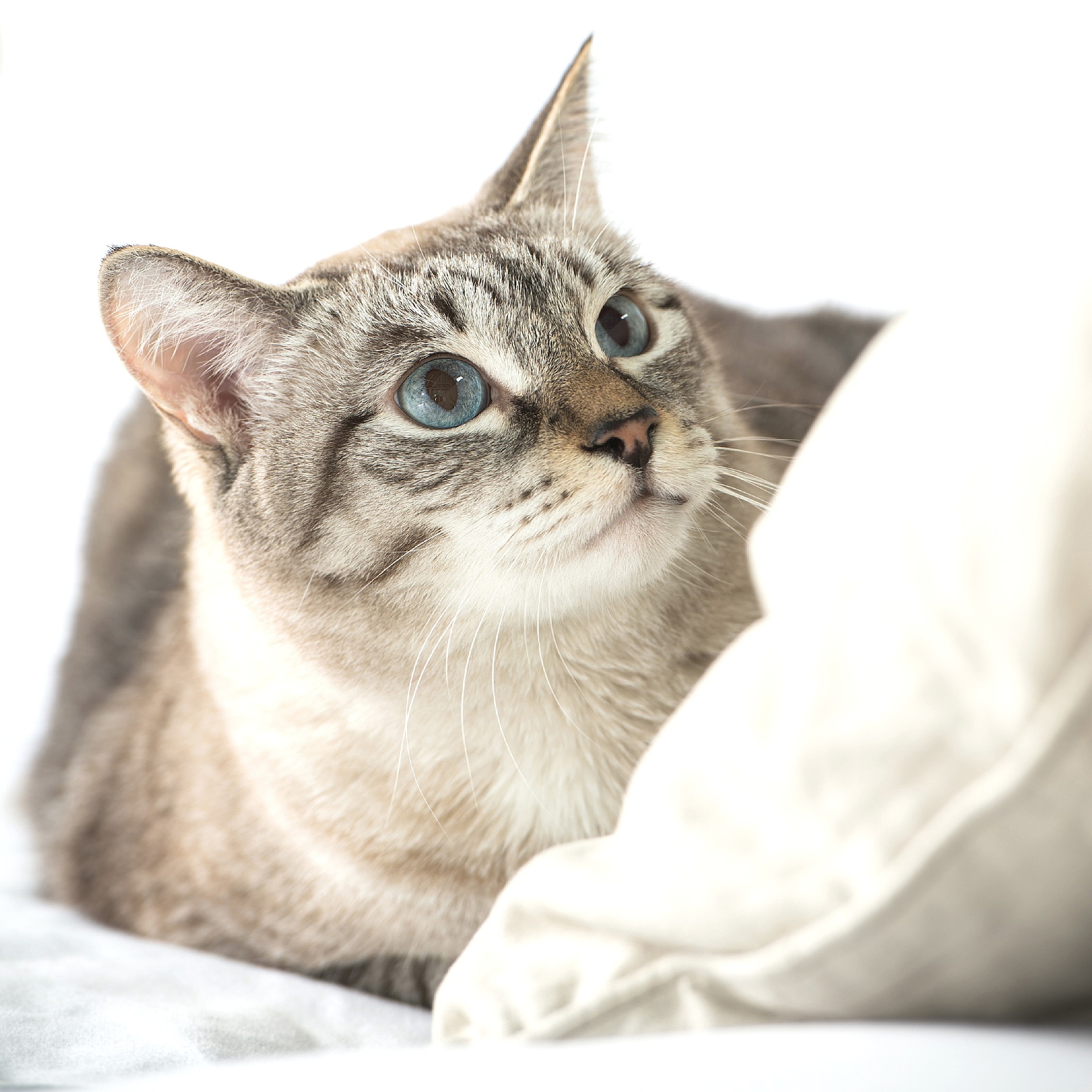
Few things are as upsetting as discovering your cat has peed in your bed. I have been there myself. Walking into your bedroom after a long day only to realize your pillow or duvet is soaked is a nightmare. It feels like a personal insult to the bond you share, but I promise you that your cat is not acting out of spite.
When you deal with a cat peeing in bed, you are looking at a high-decibel communication signal. In the feline world, scent is everything. Your bed is the ultimate scent hub of the person they trust most. If you are struggling with a cat peeing in bed, they are likely in physical pain or their world feels like it is falling apart.
In this guide, I am breaking down the behavioral truth, the hidden health risks, and the exact steps I took to solve the problem of a cat peeing in bed.
Is Your Cat Eating the Right Amount? Nutrition is the foundation of behavior. If their gut is not right, their mood will not be either. Try our [Advanced Cat Nutrition Calculator] to see if your chaos-muppet is getting the right fuel.
Table of Contents
Cat Peeing in Bed: The Real Causes and What Actually Works
catbehaviorhq.com
1. Medical Reasons for a Cat Peeing in Bed
Before we look at the bedroom environment, we have to look at the bladder. When a cat peeing in bed becomes a daily occurrence, they are not looking for a toilet. Instead, they are looking for a soft surface because their usual bathroom routine has become a source of agony.
I dug into the research for you. A landmark study published in the Journal of Feline Medicine and Surgery found that environmental stress and physical health are deeply linked. If a cat has Feline Idiopathic Cystitis (FIC), their bladder lining actually thins due to stress. This is a major trigger for a cat peeing in bed.
Why the Bed? Imagine you have a severe UTI. The litter box is hard, it requires digging, and it is often in a cold laundry room. Your bed is soft, absorbent, and smells like safety. To an ill cat, your bed is essentially a hospital bed.
- Urinary Tract Infections (UTI): The burning sensation makes them associate the litter box with pain. This often leads to a cat peeing in bed.
- Kidney Disease or Diabetes: These conditions increase urine volume. This often leads to accidents before they can reach the box.
- Arthritis: If your bed is easier to climb into than a high-walled litter tray, a senior cat peeing in bed is often just trying to find a comfortable spot.
Alexander’s Emergency Note: If your male cat is straining, crying, or producing only drops, go to the vet immediately. This is a potential blockage and is a life-threatening emergency.
2. The Psychology of the Scent Mix
If your vet gives you a clean bill of health, we have to look at anxiety. In my experience, a cat peeing in bed is not trying to make you mad. They do it because they are terrified.
Cats have a biological need to self-soothe through scent. Your bed smells more like you than any other place in the house. When a cat feels insecure because of a new roommate, a loud construction project, or a shift in your work schedule, they mix their scent with yours. This creates a communal scent that makes them feel protected.
The Invisible Triggers I have Seen:
- The Window Threat: Seeing a stray cat outside can make your cat feel like their territory is under siege. A cat peeing in bed is often trying to deadbolt the house with their smell.
- Routine Shifts: Even changing your brand of laundry detergent can make the bed smell wrong. This prompts a cat peeing in bed to fix the smell with their own.
3. Litter Box Aversion and Bed Accidents
If your cat does not trust their tray, they will find a soft and quiet alternative. Often, the reason for a cat peeing in bed is simply that the litter box setup is failing their standards.
I have put together this comparison based on what cats actually prefer versus what humans think looks clean.
| The Alexander Ideal | The Bed-Peeing Trigger |
|---|---|
| Large, open-top box | Small, covered box that traps odors |
| Unscented, sand-like clumping litter | Sharp wood pellets or Floral Fresh scents |
| Quiet, low-traffic location | Next to a buzzing dryer or loud fridge |
| The 1+1 Rule (1 box per cat +1) | A single box shared by multiple cats |
If your cat is also avoiding the box in other ways, check out my deep dive on the [Cat Peeing Beside Litter Box] for a full environment reset.

4. Territorial Friction and the Multi-Cat Glitch
In multi-cat homes, your bed is high-value real estate. If you have inter-cat tension, one cat might be guarding the hallway or the litter box area.
If a cat feels they might be ambushed while using the box, they will look for a place with a clear line of sight. Your bed usually offers a 360-degree view. This makes it the safest place for them to be vulnerable and is a top reason for a cat peeing in bed.
The Solution: You need to increase vertical territory. Adding cat trees and window perches gives the dominant cat somewhere else to be. This frees up the floor for the anxious cat to reach the box safely.
5. The Alexander Action Plan: How to Stop a Cat Peeing in Bed
You do not need to punish your cat. Punishment actually makes the peeing worse by increasing anxiety. You need a system instead.
- Step 1: The Enzymatic Reset. Regular laundry detergent does not work. Cat urine contains uric acid crystals that only enzymatic cleaners can break down. Without this, a cat peeing in bed will keep returning to the same spot.
- Step 2: Temporary Access Control. Until the behavior stops, the bedroom door stays closed. You need to break the habit while you fix the underlying cause.
- Step 3: Positive Association. Spend 15 minutes a day playing with your cat on the bed once it is clean. Cats rarely pee where they eat or play. By playing there, you change the vibe for a cat peeing in bed from a bathroom to a fun zone.
- Step 4: Decode the Stress. Use my [Cat Body Language Decoder] to find the subtle signs of ear-pinning or tail-flicking that happen before the accident occurs.
Final Thoughts
A cat peeing in bed is a cry for help rather than a grudge. Whether it is a hidden UTI or a fear of the new neighbor’s dog, your cat is telling you their world does not feel safe. Once you rule out the medical side and reset their bathroom confidence, you will get your sanctuary back.