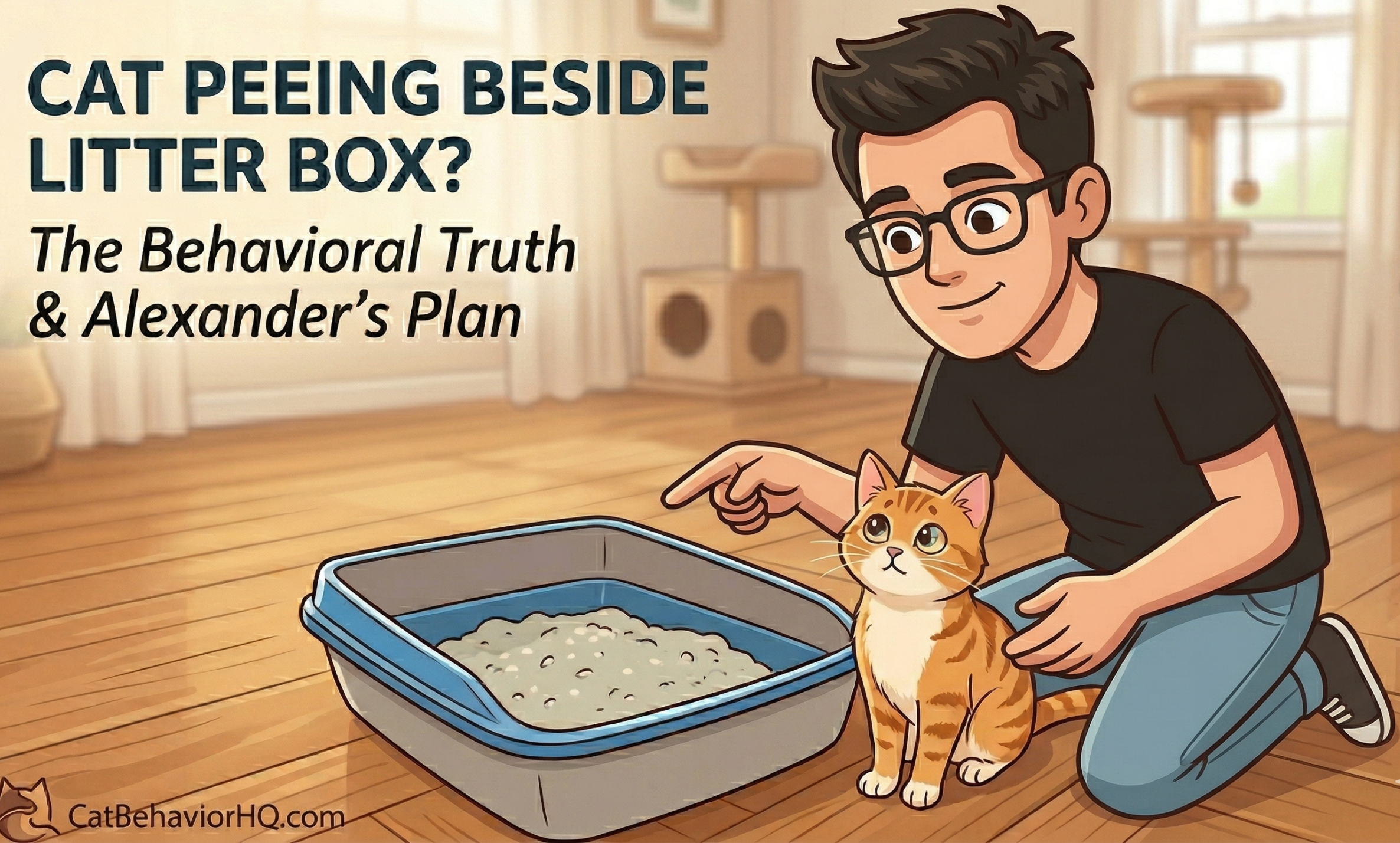
I’ve been there. You walk into the room, step on a cold, wet patch of carpet, and feel that immediate mix of frustration and worry. When my cat first started peeing beside the box, I went down a rabbit hole of confusing medical forums.
I realized that most “expert” advice is either too clinical or just tells you to “buy a new litter.” But after digging into the actual science, I learned that this behavior is almost always a desperate form of communication. Your cat isn’t being spiteful; they are either in pain or their environment feels “broken.”
In this guide, I’m taking the complex studies from places like the Cornell Feline Health Center and the National Library of Medicine and breaking them down into plain English. You’ll learn why your cat is “protesting” and the step-by-step plan I use to fix it.
Table of Contents
Why Is My Cat Peeing Beside the Litter Box?
catbehaviorhq.com
1. Medical Causes for a Cat Peeing Beside the Litter Box
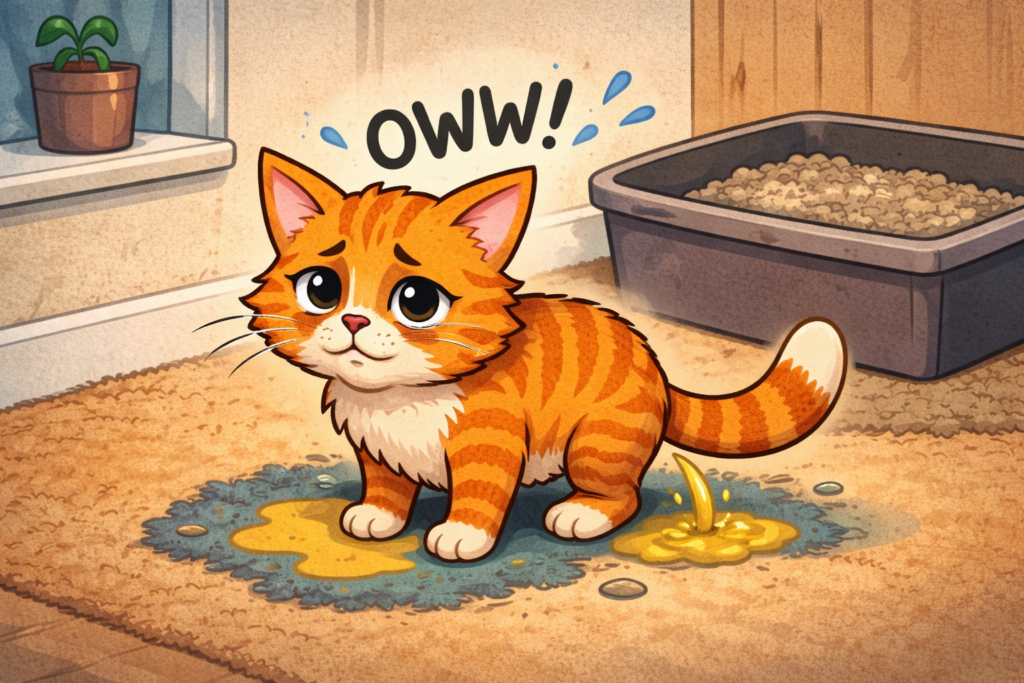
Before we talk about behavior, we have to talk about biology. A study in the Journal of American Veterinary Medical Association found that over 60% of cases involving a cat peeing beside the litter box are actually caused by an underlying medical problem.
I’ve read the textbooks so you don’t have to. Here is what is usually happening behind the scenes when you find your cat peeing beside the litter box:
- The “Burning” Sensation (UTIs): Imagine it hurts every time you use a specific bathroom. Eventually, you’d stop going in there. To avoid the “pain box,” you’ll often find your cat peeing beside the litter box instead.
- Stress-Related Bladder Pain (FIC): This is called Feline Idiopathic Cystitis. It’s the cat version of a stress migraine, but in their urinary tract. This inflammation is a leading cause of a cat peeing beside the litter box.
Alexander’s Emergency Note: If your male cat is straining, crying, or producing only drops, stop reading and go to the vet now. This is a blockage, and it is a life-threatening emergency.
2. Psychological Reasons Your Cat is Peeing Beside the Litter Box
If the vet gives your cat a clean bill of health, we are looking at Litter Aversion. This is where the cat wants to go in the bathroom, but something about the experience is “gross” to them.
The Texture Factor: Cats are incredibly sensitive to how things feel under their paws. In the wild, they prefer soft sand or soil. If you use “innovative” wood pellets or sharp crystals, it can feel like walking on LEGOs to a cat. If you see your cat scratching the floor beside the box instead of the litter inside, they are telling you they hate the texture.
The “Scent Billboard” Effect: One of the biggest mistakes I see (and I’ve made it myself) is using ammonia-based cleaners or vinegar to clean up accidents. Cat urine contains uric acid crystals. Normal soap might remove the smell for your nose, but those crystals stay trapped. To a cat, it’s a “Scent Billboard” that says “Bathroom Here!”
3. Is Stress Causing Your Cat to Pee Beside the Litter Box?
Stress doesn’t just change a cat’s mood; it changes their chemistry. I learned through my research that chronic stress actually thins the protective lining of a cat’s bladder, making urination uncomfortable.
My common observations on stress:
- The Window Threat: Did a stray cat walk past the window? Your cat might pee by the door or the box to “deadbolt” the house with their scent.
- The Routine Shift: Did you change your work hours? Your cat’s “safe” schedule is gone, and their bladder is reacting to the anxiety.
If your cat is acting weird and you aren’t sure why, my [Cat Body Language Decoder] can help you spot the stress before it hits your carpet.
4. Territorial Friction (The “Multi-Cat” Glitch)
If you have more than one cat, you have a territory. A landmark study found that the risk of “inappropriate urination” increases significantly with every cat you add to the home.
In my experience, cats don’t like to be “trapped.” If you have a covered litter box in a corner, it only has one exit. If another cat (or even a curious dog) is standing in the doorway, the cat inside feels ambushed. To avoid the fight, they’ll just pee beside the box where they have a 360-degree view of potential “attacks.”
5. The Alexander Action Plan: How to Fix It
You don’t need a miracle; you just need to reset the environment. Here is the step-by-step plan that actually works:
- Step 1: The “1+1” Rule. You need one box per cat, plus an extra one. If you have two cats, you need three boxes. They should be in different rooms, not lined up together (which cats see as one big bathroom).
- Step 2: Go “Naked” (Unscented). Cats’ noses are way more sensitive than ours. That “Floral Fresh” litter smells like a chemical factory to them. Switch to plain, unscented, fine-grain clumping litter.
- Step 3: Enzymatic Cleaning. You must use an enzymatic cleaner. These contain proteins that “eat” the uric acid crystals. Until you use one, you aren’t actually cleaning; you’re just masking a smell that your cat can still hear loud and clear.
- Step 4: The “Safe” Box. Swap covered boxes for large, open ones. Give your cat a clear line of sight so they feel safe while they are vulnerable.
- Step 5: Nutrition Foundation. Believe it or not, what your cat eats affects their urinary health. High-protein, moisture-rich diets keep the bladder flushed. Check out my [Advanced Cat Nutrition Calculator] to see if your “chaos-muppet” is getting the right fuel.
Final Thoughts
Your cat peeing beside the box is a loud, smelly cry for help. It is almost never about “attitude” and almost always about safety or comfort. Once you rule out the medical side with a vet, it’s all about making the litter box the easiest, safest place in the house to be.