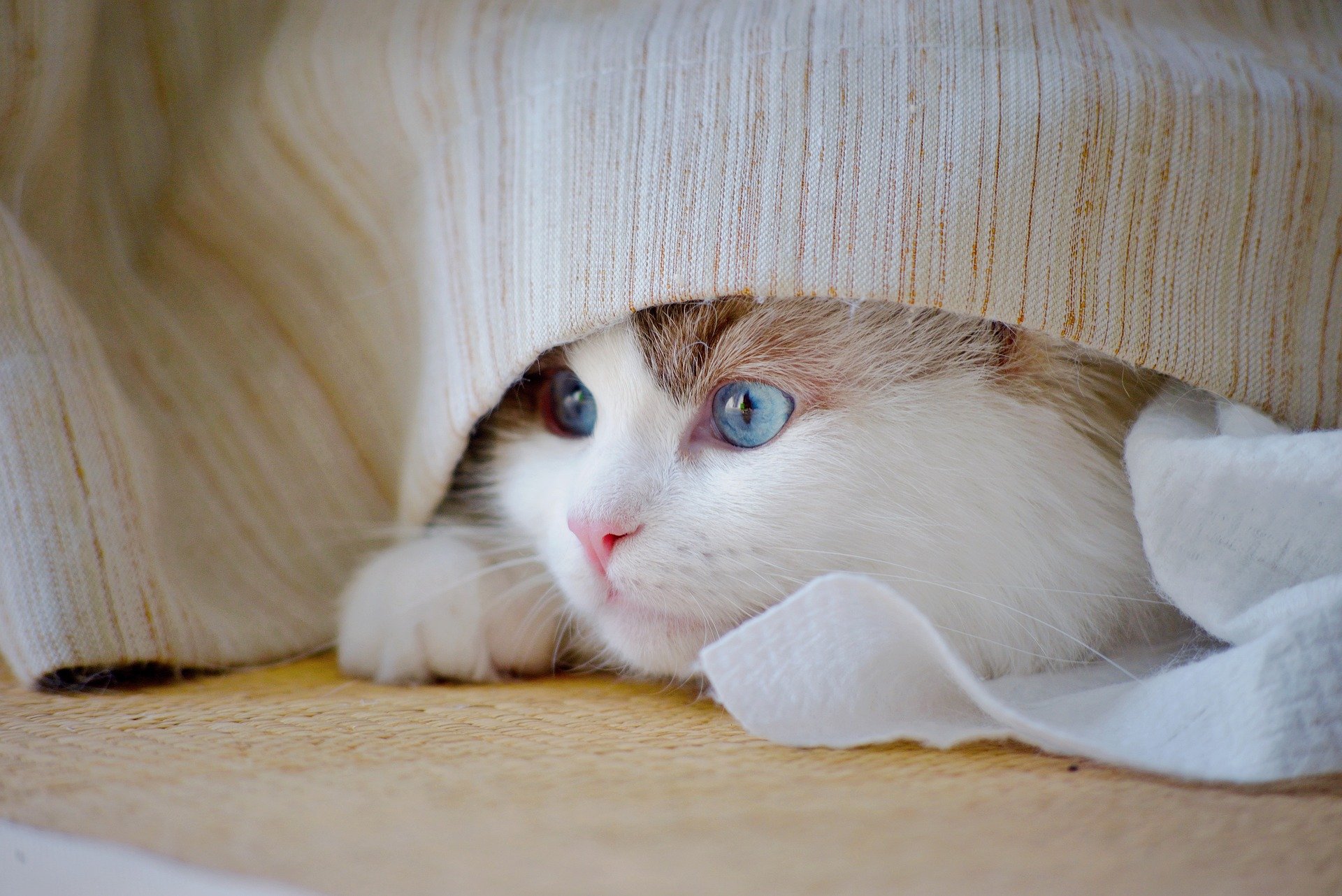
Is your cat hiding all the time, it’s natural to feel worried or confused. While cats do enjoy quiet time alone, persistent or sudden hiding is usually a sign that something is wrong. Cats don’t hide without a reason hiding is a coping behavior.
In this guide, you’ll learn why cats hide, when hiding is normal versus concerning, and how to help a hiding cat feel safe and confident again.
What Does It Mean When a Cat Is Hiding All the Time?
Cats hide when they feel:
- Unsafe or threatened
- Stressed or anxious
- Unwell or in pain
- Overstimulated
Hiding reduces exposure and gives cats a sense of control. When hiding becomes frequent or prolonged, it’s a signal, not a personality trait.
Understanding subtle signals helps identify stress early.
Understanding Cat Body Language: A Complete Beginner’s Guide
Is Your Cat Eating the Right Amount?
Nutrition is the foundation of behavior. To ensure your cat is healthy and happy, try our Advanced Cat Nutrition Calculator.
- 1. Stress and Anxiety Are the Most Common Reasons to Cat hiding all day
- 2. A Cat Hiding All day May Be Sick or in Pain
- 3. Cat Hiding After a Change in Environment
- 4. New Cats Hiding All the Time (Adjustment Period)
- 5. Cat Hiding and Other Behavior Problems Often Go Together
- How to Help a Cat That Is Hiding All the Time (Step-by-Step)
- When a Cat Hiding All the Time Is an Emergency
- Frequently Asked Questions About Cats Hiding
- Final Thoughts

1. Stress and Anxiety Are the Most Common Reasons to Cat hiding all day
Stress is the number one reason a cat hides all the time.
Common Stress Triggers
- Moving to a new home
- New pets or people
- Loud noises or construction
- Changes in routine
- Conflict with another cat
- Loss of a companion (human or animal)
Cats often hide in closets, under beds, or behind furniture when they feel overwhelmed.
Signs Stress Is the Cause
- Hiding for hours or days
- Reduced appetite
- Increased vocalization when alone
- Avoiding eye contact or interaction
Stress often shows up alongside other behaviors.
Cat Excessive Grooming: Causes, Warning Signs & How to Stop It
2. A Cat Hiding All day May Be Sick or in Pain
Cats instinctively hide illness. If your cat is hiding more than usual, medical causes must be ruled out.
Possible Medical Causes
- Pain (arthritis, injury)
- Dental disease
- Urinary tract issues
- Gastrointestinal discomfort
- Fever or infection
- Vision or hearing problems
Warning Signs That Require a Vet Visit
- Sudden hiding in a normally social cat
- Hiding combined with lethargy
- Changes in eating or litter box habits
- Vocalizing when touched
3. Cat Hiding After a Change in Environment
Even small changes can trigger hiding.
Environmental Changes That Cause Hiding
- Rearranged furniture
- New smells (cleaners, guests, bags)
- New schedules or owner absence
- Seeing outdoor cats through windows
Cats rely on familiarity. When their environment changes, hiding helps them feel secure.
4. New Cats Hiding All the Time (Adjustment Period)
It’s normal for a new cat to hide but only temporarily.
How Long Is Normal?
- First few days: very common
- First 1–2 weeks: acceptable
- Beyond 2–3 weeks: needs intervention
How to Help a New Cat
- Provide one quiet “safe room”
- Avoid forced interaction
- Sit calmly nearby and let the cat approach
- Use food, toys, and routine to build trust
5. Cat Hiding and Other Behavior Problems Often Go Together
Hiding rarely happens alone. It’s often paired with:
- Excessive meowing
- Spraying or litter box issues
- Biting or aggression
- Overgrooming
- Cat Constantly Meowing: Causes, Warning Signs & How to Stop It
- Why Is My Cat Spraying Inside the House? Causes & How to Stop It
- Cat Biting Me: Why It Happens & What to Do
Multiple behaviors usually point to chronic stress.
How to Help a Cat That Is Hiding All the Time (Step-by-Step)
Step 1: Rule Out Medical Causes
If hiding is sudden or extreme, start with a vet visit.
Step 2: Create Safe Spaces
- Covered beds
- Boxes or cubbies
- Quiet rooms
- Elevated perches
A cat needs control over exposure.
Step 3: Reduce Environmental Stress
- Keep routines predictable
- Minimize loud noises
- Avoid frequent rearranging
- Introduce changes slowly
Step 4: Increase Positive Interaction (Without Pressure)
- Sit nearby without staring
- Use treats tossed gently nearby
- Engage with wand toys at a distance
- Let the cat initiate contact
Step 5: Be Patient
Confidence takes time. Forcing interaction makes hiding worse.
When a Cat Hiding All the Time Is an Emergency
Seek veterinary care immediately if hiding is paired with:
- Refusal to eat or drink
- Difficulty breathing
- Vomiting or diarrhea
- Limping or visible pain
- Sudden collapse or disorientation
Cats hide serious illness until they can’t anymore.
Frequently Asked Questions About Cats Hiding
Is it normal for a cat to hide all the time?
No. Occasional hiding is normal, but constant hiding usually signals stress, fear, or illness.
How long should I let my cat hide?
Short-term hiding is okay, especially after changes. If hiding lasts more than two weeks or worsens, intervention is needed.
Should I pull my cat out of hiding?
No. Forcing a cat out increases fear and delays recovery.
Can anxiety cause a cat to hide constantly?
Yes. Anxiety is one of the most common reasons for persistent hiding.
Will my cat stop hiding on their own?
Some cats do once stressors are removed. Others need environmental and behavioral support.
Final Thoughts
If your cat is hiding all the time, they aren’t being antisocial they’re protecting themselves. Hiding is a survival response, not a personality flaw.
By identifying the cause and making thoughtful changes, most cats regain confidence and re-engage with their environment.
Your cat isn’t avoiding you.
They’re asking for safety.